
Magento DevOps CI/CD Docker Integration: Magento 2 DevOps integration is essential for any scalable webshop. We have invested huge number of hours in integrating AWS cloud, Jenkins, Docker, reverse proxies like Varnish/Nginx and complete DevOps management. Magento 2 DevOps includes all those essential service packages to build better IAAS (Infrastructure as a Service).
Complete platform based on AWS/Google/Azure Cloud architecture. Deployment of the application code, database, and quality assurance script. Complete Jenkins integration with your source code management.Docker based DevOps integration. Various containers deployment using docker. Various software bundle inclusion in docker container like – Nginx and Varnish. Automated shell script for the docker automation.
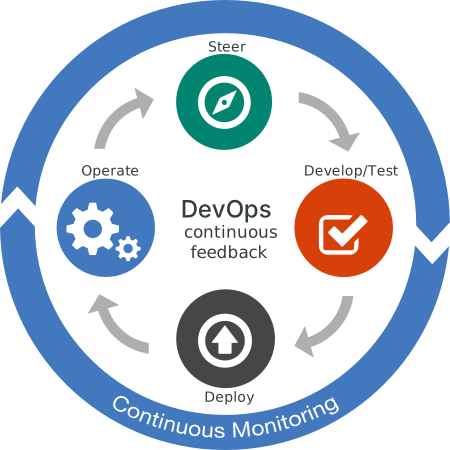
DevOps is a term that aims at unifying software development(Dev) and software operations(Ops). It recommends automation and monitoring at all the steps of software construction from integration, testing, quality assurance, and releasing to deployment.
DevOps delivers shorter development cycles, dependable releases, with an increase in the deployment frequency, in alignment with the business objectives.
The main problem that is being faced is moving the complete application code from the developer end to the production environment. This however include many other sub-entities like – the builds, manual deployments, lack of uniformity, different operating systems, slowness, different environments, and security.
In the continuous integration, the developers and the quality analysts(testers) collaboratively validate the source code. Previously, the developers would write the code and then would get it integrated once a month for testing. This was inefficient in a way that if – a mistake in the code from four weeks ago could force the developers to revise code written one week ago. So to overcome that problem, continuous integration depends on automation to integrate and test the code continuously.
It is a continuous process of creating the releasable artifacts. In fact, most of the companies release to users once or even multiple times a day while others release the software at a slower pace for market reasons. Anyway, the ability to release is tested continuously. Continuous deployment is possible due to the cloud environments that are available these days which allow you deploy to production without shutting down and manually updating the servers.